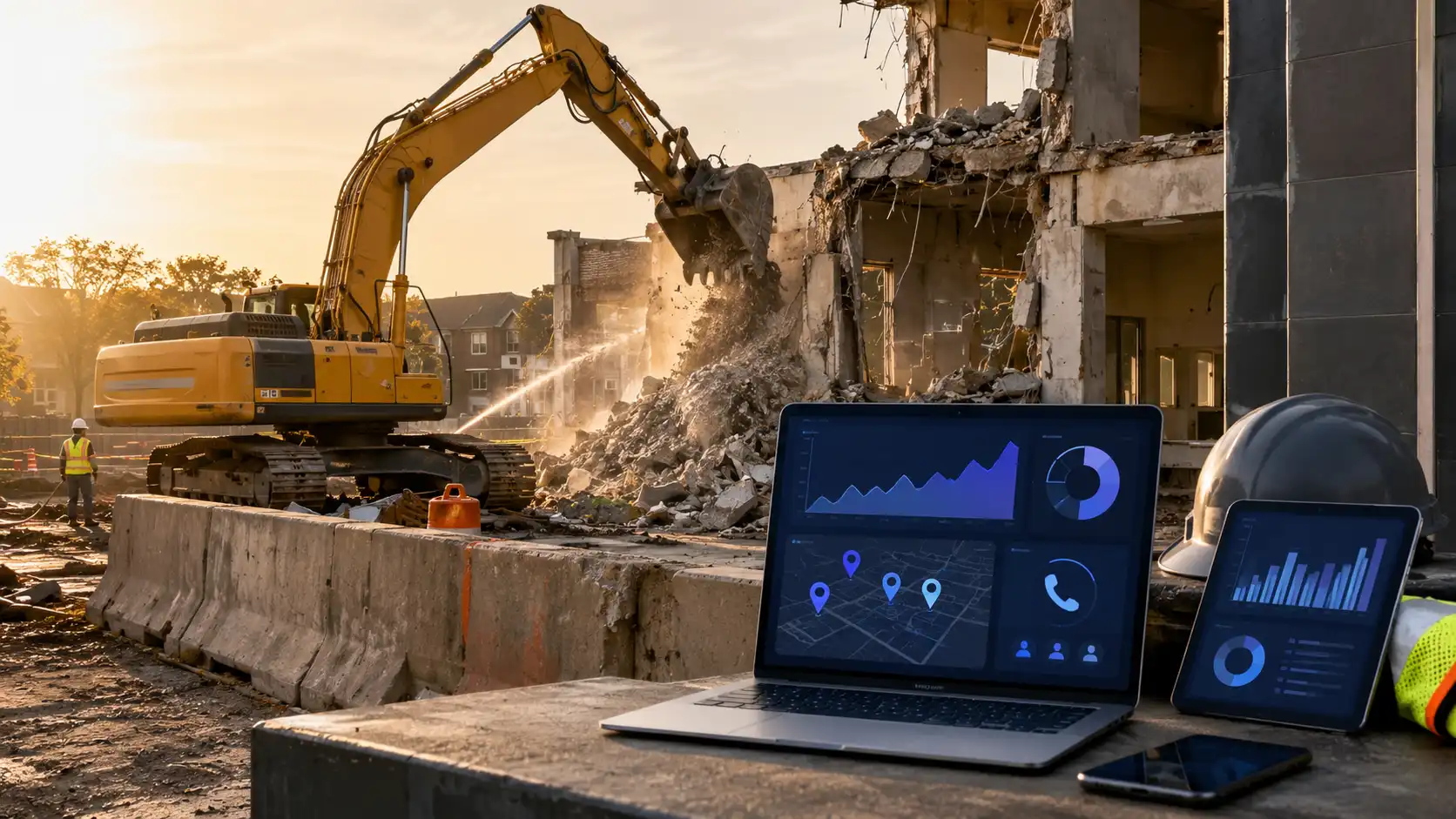
Building demolition is a complex process that requires careful planning and execution. This comprehensive overview explores essential methods used in demolition projects, from mechanical techniques to implosion and selective demolition. We’ll cover key aspects of demolition planning, safety protocols, and environmental considerations. By understanding these methods, demolition professionals can ensure efficient, safe, and environmentally responsible projects. Whether dealing with asbestos removal, building implosion, or occupational safety concerns, this guide provides valuable insights for successful demolition operations.
Key Takeaways
- Thorough planning and preparation are crucial for safe and efficient building demolition projects
- Mechanical demolition methods offer versatility and precision for various types of structures
- Selective demolition practices allow for targeted removal while preserving valuable building components
- Deconstruction for material salvage promotes sustainability and reduces environmental impact in demolition projects
- Implementing strict safety protocols and environmental considerations is essential in modern demolition practices
Understanding the Basics of Building Demolition

Building demolition involves critical steps beyond using a wrecking ball or excavator. Understanding legal requirements, assessing structural integrity, and identifying hazardous materials are essential for safe and efficient demolition. These processes help minimize risks, ensure proper handling of construction debris, and comply with regulations. Each aspect plays a crucial role in successful demolition projects.
Exploring Legal Requirements and Regulations
Building demolition projects must adhere to strict legal requirements and regulations. These laws govern aspects such as environmental protection, worker safety, and proper disposal of materials, including steel and other construction debris. Compliance with these regulations is crucial for ensuring the safety of workers and the public, as well as minimizing environmental impact.
Local, state, and federal authorities often require specific permits and approvals before demolition can begin. These may include environmental impact assessments, structural integrity evaluations, and plans for managing hazardous materials. Understanding and following these legal requirements is essential for successful building demolition and subsequent restoration projects.
Assessing Structural Integrity Before Demolition
Assessing structural integrity before demolition is crucial for identifying potential hazards and planning effective waste management strategies. Engineers evaluate the building’s condition, including its foundation, load-bearing walls, and overall stability. This assessment helps determine the safest demolition methods and identifies areas that may require special handling to prevent unexpected collapses or accidents.
The evaluation process also aids in developing efficient recycling and construction waste disposal plans. By understanding the building’s composition and structural elements, demolition teams can better segregate materials for recycling, reducing the amount of waste sent to landfills. This approach not only minimizes environmental impact but also supports sustainable practices in the demolition industry.
Identifying Hazardous Materials in Structures
Identifying hazardous materials is a critical step in building demolition, especially when dealing with older structures. Asbestos, lead-based paint, and other toxic substances often lurk within walls, floors, and ceilings, posing serious health risks during deconstruction. Thorough inspections of each column, steel frame, and structural component help demolition teams develop safe removal strategies.
Proper identification of hazardous materials enables the creation of effective containment and disposal plans. This process may involve specialized testing of various building elements, including flooring materials and insulation. By accurately identifying and addressing these hazards, demolition professionals can ensure the safety of workers and the surrounding environment throughout the deconstruction process.
Planning and Preparation for Demolition Projects

Planning and preparation are crucial for successful building demolition projects. This phase involves conducting comprehensive site surveys, developing effective demolition plans, securing necessary permits, coordinating with stakeholders, and establishing safety measures. Engineers and demolition experts work together to ensure compliance with Occupational Safety and Health Administration regulations, manage dust control, and operate loaders safely throughout the process.
Conducting Comprehensive Site Surveys
Comprehensive site surveys form the foundation of successful demolition projects. Civil engineers assess the building’s structural integrity, identifying potential hazards and areas that require special attention. These surveys also evaluate the site’s compliance with current building codes, ensuring that the demolition process adheres to all relevant regulations.
During site surveys, professionals examine the building’s ductwork, electrical systems, and other infrastructure components. This thorough examination helps determine which materials can be salvaged for reuse, contributing to sustainable demolition practices. Additionally, these surveys play a crucial role in protecting public health by identifying any potential environmental or safety risks associated with the demolition process.
Developing an Effective Demolition Plan
Developing an effective demolition plan is crucial for successful projects in Seattle and beyond. This plan outlines the step-by-step process for safely dismantling structures, including concrete buildings and bridges. It addresses safety concerns, property protection, and environmental considerations, ensuring a smooth demolition process.
The demolition plan typically includes:
- Site preparation and safety measures
- Demolition sequence and methods
- Equipment and resource allocation
- Waste management and recycling strategies
- Traffic control and public safety measures
Securing Necessary Permits and Approvals
Securing necessary permits and approvals is a critical step in the demolition process. Local authorities require specific documentation for the removal of walls, wood structures, and other building materials. These permits ensure compliance with safety regulations and environmental standards, particularly when using heavy equipment like cranes.
The approval process often involves submitting detailed plans for scaffolding installation and debris management. Demolition companies must demonstrate their ability to safely dismantle structures while minimizing risks to surrounding properties and the public. Obtaining these permits can take time, so it’s essential to start the application process early in the project timeline.
Coordinating With Stakeholders and Communities
Coordinating with stakeholders and communities is crucial for successful building demolition projects. Contractors must engage with local residents, businesses, and government officials to address concerns about noise, dust, and safety. This process involves conducting thorough inspections of surrounding walls and floors to assess potential impacts on neighboring structures.
Effective communication strategies ensure stakeholders understand the demolition timeline and safety measures in place. Contractors often organize community meetings, distribute informational materials, and establish dedicated channels for feedback. This collaborative approach helps mitigate disruptions and fosters positive relationships throughout the building demolition process:
- Identify key stakeholders and community representatives
- Schedule informational meetings and site tours
- Develop clear communication channels for updates and concerns
- Address potential impacts on local infrastructure and daily activities
- Collaborate on traffic management and noise reduction strategies
Establishing Safety Measures and Protocols
Establishing safety measures and protocols is crucial in controlled demolition projects. Engineering teams develop comprehensive safety plans that address potential hazards and outline procedures to protect workers, nearby structures, and the public. These plans include detailed risk assessments, emergency response protocols, and specific safety requirements for each phase of the demolition process.
Security measures play a vital role in ensuring a safe demolition environment. Contractors implement strict access controls, install protective barriers, and use advanced monitoring systems to prevent unauthorized entry and protect surrounding areas. These security protocols work in conjunction with engineering safeguards to create a controlled environment where structures can be safely demolished without compromising public safety or property integrity.
Mechanical Demolition Methods

Mechanical demolition methods are essential techniques in building demolition. These methods include utilizing wrecking balls, implementing high-reach excavators, and operating hydraulic pulverizers and crushers. Each approach offers unique advantages for efficient and safe structural removal. Understanding these techniques helps demolition professionals choose the most appropriate method for specific projects.
Utilizing Wrecking Balls for Demolition
Wrecking balls remain a powerful tool in building demolition, particularly for larger structures. Operators swing these massive steel spheres, typically weighing between 1,000 to 12,000 pounds, to break down walls and structural elements. This method proves effective for demolishing concrete and masonry buildings, offering a balance of force and control.
Despite their effectiveness, wrecking balls require skilled operators and careful planning. Safety considerations include assessing the building’s structural integrity, controlling debris scatter, and maintaining a safe perimeter. Modern demolition projects often combine wrecking ball techniques with other methods to optimize efficiency and minimize environmental impact:
| Wrecking Ball Characteristics | Advantages | Considerations |
|---|---|---|
| Weight: 1,000-12,000 lbs | Effective for large structures | Requires skilled operators |
| Material: Steel | Breaks down concrete and masonry | Careful planning needed |
| Operation: Swinging motion | Balance of force and control | Safety perimeter essential |
Implementing High-Reach Excavators
High-reach excavators play a crucial role in modern building demolition projects. These specialized machines feature extended boom arms that can reach heights of up to 130 feet, allowing operators to safely dismantle tall structures from the ground. Equipped with various attachments, such as crushers and shears, high-reach excavators can effectively break down concrete, steel, and other building materials.
The use of high-reach excavators offers several advantages in demolition projects. These machines provide increased safety by allowing operators to work from a distance, reducing the risk of injury from falling debris. Additionally, high-reach excavators offer precise control, enabling selective demolition and minimizing damage to surrounding structures. Their versatility and efficiency make them a valuable asset in urban demolition projects:
| Feature | Benefit | Application |
|---|---|---|
| Extended boom arm | Reach heights up to 130 feet | Tall building demolition |
| Specialized attachments | Versatile material processing | Concrete and steel structures |
| Remote operation | Enhanced operator safety | Hazardous demolition sites |
Operating Hydraulic Pulverizers and Crushers
Hydraulic pulverizers and crushers are essential tools in modern building demolition. These attachments, fitted to excavators, efficiently break down concrete structures and separate reinforcing steel. Operators use these devices to reduce large concrete sections into manageable pieces, facilitating easier handling and transportation of debris.
The use of hydraulic pulverizers and crushers offers significant advantages in demolition projects. These tools allow for precise material separation, enabling more effective recycling of construction materials. By reducing noise and dust compared to traditional methods, they also help minimize environmental impact and improve worker safety on demolition sites.
Advantages of Mechanical Demolition Techniques
Mechanical demolition techniques offer significant advantages in building deconstruction projects. These methods provide increased efficiency, allowing for faster completion of demolition tasks while maintaining high safety standards. The use of specialized equipment like excavators and hydraulic attachments enables precise control over the demolition process, reducing risks to workers and surrounding structures.
Another key advantage of mechanical demolition techniques is their versatility across various project types. From small residential buildings to large commercial structures, these methods can be adapted to suit different demolition requirements. Additionally, mechanical demolition often results in cleaner separation of materials, facilitating more effective recycling and waste management processes:
- Increased efficiency and speed
- Enhanced safety through precise control
- Adaptability to various project sizes
- Improved material separation for recycling
- Reduced environmental impact
Implosion Techniques in Demolition

Implosion techniques are advanced demolition methods used for large structures. This section explores the controlled use of explosives, planning structural collapse patterns, and successful case studies. It also addresses risk management in implosion projects, highlighting the precision and expertise required for these complex demolitions.
Understanding Controlled Use of Explosives
Controlled use of explosives in demolition requires precise planning and execution. Engineers strategically place charges at key structural points to initiate a controlled collapse. This method, often used for high-rise buildings or large structures, allows for efficient demolition while minimizing debris scatter and impact on surrounding areas.
Safety protocols play a crucial role in explosive demolition. Extensive perimeter control, evacuation procedures, and blast monitoring systems ensure public safety. Demolition experts carefully calculate explosive quantities and timing sequences to achieve the desired collapse pattern:
| Aspect | Consideration | Importance |
|---|---|---|
| Explosive placement | Strategic structural points | Critical for controlled collapse |
| Safety measures | Perimeter control, evacuation | Ensures public safety |
| Calculation precision | Explosive quantity, timing | Determines collapse pattern |
Planning Structural Collapse Patterns
Planning structural collapse patterns is a critical aspect of implosion techniques in building demolition. Engineers analyze the building’s structural design, identifying key support elements and load-bearing walls. This analysis helps determine the optimal placement of explosive charges to achieve a controlled collapse sequence.
Demolition experts use computer simulations and physical models to predict and refine collapse patterns. These tools help visualize the building’s behavior during implosion, allowing for adjustments to the demolition plan. Careful consideration of factors such as building materials, surrounding structures, and environmental conditions ensures a safe and efficient implosion process.
Case Studies of Successful Building Implosions
Successful building implosions have revolutionized large-scale demolition projects worldwide. The Las Vegas Landmark Hotel implosion in 1995 stands out as a prime example, where engineers precisely collapsed the 31-story structure within its own footprint. This controlled demolition showcased the effectiveness of implosion techniques in urban environments, minimizing impact on surrounding buildings.
Another notable case is the 2001 implosion of the J.L. Hudson Department Store in Detroit. At the time, it was the tallest building ever imploded and the largest single building taken down by explosives in one day. The success of this project demonstrated the capability of implosion methods to safely and efficiently demolish massive structures while adhering to strict environmental and safety regulations.
Managing Risks Associated With Implosion
Managing risks associated with implosion techniques requires meticulous planning and execution. Demolition experts conduct thorough structural analyses, identifying potential weak points and assessing the impact of explosives on surrounding areas. They develop detailed safety protocols, including evacuation plans, debris containment strategies, and dust suppression methods to minimize environmental and health risks.
Risk management in implosion projects also involves extensive communication with local authorities and stakeholders. Demolition teams coordinate closely with emergency services, establish secure perimeters, and implement real-time monitoring systems to ensure public safety. These comprehensive measures help mitigate potential hazards and ensure successful building implosions while protecting nearby structures and communities.
Selective Demolition Practices

Selective demolition practices focus on precise removal of specific building elements while preserving others. This approach includes executing interior demolition strategies, implementing structural modification techniques, preserving adjacent structures, and realizing cost benefits. These methods allow for targeted deconstruction, minimizing waste and maximizing resource efficiency in building renovation and partial demolition projects.
Executing Interior Demolition Strategies
Interior demolition strategies involve precise removal of non-structural elements within a building. Demolition teams carefully dismantle fixtures, walls, and finishes, preserving structural integrity while creating space for renovation or repurposing. This approach requires thorough planning to identify load-bearing elements and utilities that must remain intact.
Executing interior demolition demands specialized tools and techniques to minimize dust, noise, and vibration. Contractors use handheld equipment for selective removal, ensuring controlled deconstruction of specific areas. This method allows for efficient material sorting, facilitating recycling and waste reduction in building renovation projects.
Structural Modification Techniques
Structural modification techniques in selective demolition require precise engineering and execution. Demolition experts carefully remove or alter specific structural elements while maintaining the overall integrity of the building. This process often involves temporary bracing and support systems to ensure stability during modifications.
Advanced tools and technologies play a crucial role in structural modifications. Concrete sawing, core drilling, and controlled demolition methods allow for accurate removal of targeted sections. These techniques enable contractors to adapt existing structures for new uses or prepare them for partial demolition, minimizing waste and preserving valuable building components.
Preserving Adjacent Structures and Areas
Preserving adjacent structures and areas during selective demolition requires careful planning and execution. Demolition experts assess the impact of vibrations, dust, and debris on nearby buildings, implementing protective measures such as temporary shoring and dust barriers. They also monitor structural stability throughout the demolition process, using precision techniques to minimize disturbance to surrounding areas.
Effective communication with neighboring property owners plays a crucial role in preserving adjacent structures. Demolition teams provide regular updates on project progress and address concerns promptly. They may also conduct pre- and post-demolition surveys of nearby buildings to document existing conditions and ensure any potential damage is properly addressed, maintaining positive community relations throughout the project.
Cost Benefits of Selective Demolition
Selective demolition practices offer significant cost benefits for building renovation projects. By carefully removing specific elements while preserving others, contractors reduce material waste and lower disposal expenses. This approach also allows for the salvage and reuse of valuable building components, further reducing project costs and supporting sustainable construction practices.
The precision of selective demolition techniques minimizes damage to retained structures, reducing repair and restoration expenses. This method also enables phased demolition, allowing portions of a building to remain operational during renovations. By streamlining the demolition process and reducing downtime, selective demolition often results in substantial cost savings for property owners and developers.
Deconstruction for Material Salvage

Deconstruction for material salvage is an eco-friendly approach to building demolition. This method focuses on carefully dismantling structures to recover reusable materials, offering environmental benefits and cost savings. The process involves specific techniques for material recovery, tools for efficient deconstruction, and strategies for reusing and recycling building components.
Methods for Recovering Reusable Materials
Recovering reusable materials during building demolition requires systematic approaches to preserve valuable resources. Demolition teams employ careful dismantling techniques, starting with non-structural elements like fixtures and finishes. They then progress to structural components, using specialized tools to separate materials without damage.
Effective material recovery involves thorough sorting and cataloging of salvaged items. Teams categorize materials based on type, condition, and potential reuse value. This process enables efficient recycling and repurposing of building components, reducing waste and supporting sustainable construction practices:
- Remove non-structural elements first
- Use specialized tools for careful dismantling
- Sort and catalog salvaged materials
- Assess items for reuse potential
- Implement recycling strategies for non-reusable materials
Environmental Benefits of Deconstruction
Deconstruction offers significant environmental benefits in building demolition projects. This method reduces landfill waste by salvaging up to 90% of building materials for reuse or recycling. By preserving valuable resources, deconstruction minimizes the need for new raw materials, reducing overall environmental impact and carbon footprint associated with construction activities.
The process of deconstruction also supports local economies and creates job opportunities. It requires more labor than traditional demolition methods, fostering employment in the green construction sector. Additionally, deconstruction helps preserve historic building elements, contributing to architectural heritage conservation while promoting sustainable practices in the construction industry.
Reusing and Recycling Building Components
Reusing and recycling building components play a crucial role in sustainable demolition practices. Demolition experts carefully assess salvaged materials for their potential reuse in new construction projects or renovations. Components such as doors, windows, and structural timber often find new life in other buildings, reducing waste and preserving valuable resources.
Recycling efforts focus on processing materials that cannot be directly reused. Concrete and masonry are typically crushed for use as aggregate in new construction, while metals are sorted and sent to recycling facilities. This approach minimizes landfill waste and reduces the demand for raw materials in the construction industry:
| Material | Reuse Application | Recycling Method |
|---|---|---|
| Wood | Furniture, flooring | Mulch, biomass fuel |
| Metal | Structural components | Melting and recasting |
| Concrete | Landscape features | Crushing for aggregate |
Tools and Equipment for Efficient Deconstruction
Efficient deconstruction requires specialized tools designed for careful dismantling of building components. Contractors use reciprocating saws, pry bars, and pneumatic nail removers to separate materials without causing damage. These tools allow for precise extraction of reusable items such as doors, windows, and trim, preserving their value for future use.
Heavy equipment plays a crucial role in larger deconstruction projects. Excavators with grapple attachments assist in removing structural elements, while mobile work platforms provide access to upper floors. Contractors also employ material handlers and sorting systems to efficiently process and categorize salvaged materials on-site, streamlining the recycling and reuse process.
Safety Protocols in Building Demolition

Safety protocols are paramount in building demolition projects. This section explores implementing protective equipment standards, identifying hazards and mitigating risks, developing emergency response plans, and training demolition teams. These essential practices ensure worker safety, prevent accidents, and maintain compliance with industry regulations throughout the demolition process.
Implementing Protective Equipment Standards
Implementing protective equipment standards is crucial in building demolition projects. Demolition teams must adhere to strict safety regulations, including the use of hard hats, safety glasses, steel-toed boots, and high-visibility clothing. These standards protect workers from falling debris, dust, and other potential hazards associated with demolition activities.
Respiratory protection plays a vital role in demolition safety protocols. Workers often encounter hazardous materials such as asbestos or lead-based paint during demolition processes. To mitigate these risks, demolition companies provide appropriate respirators and train employees on their proper use and maintenance. Regular equipment inspections and replacements ensure the ongoing effectiveness of protective gear:
- Conduct daily safety briefings and equipment checks
- Provide task-specific personal protective equipment (PPE)
- Ensure proper fit and maintenance of all safety gear
- Implement a respiratory protection program
- Train workers on the correct use and limitations of PPE
Hazard Identification and Risk Mitigation
Hazard identification is a critical step in building demolition safety protocols. Demolition teams conduct thorough site assessments to identify potential risks such as unstable structures, hazardous materials, and underground utilities. This process involves visual inspections, structural analysis, and environmental testing to create a comprehensive hazard inventory.
Risk mitigation strategies are developed based on identified hazards. Demolition experts implement control measures such as temporary bracing for unstable walls, containment systems for hazardous materials, and utility disconnection procedures. These strategies are regularly reviewed and updated throughout the demolition process to address changing site conditions and ensure worker safety.
Emergency Response Planning
Emergency response planning is a critical component of safety protocols in building demolition projects. Demolition teams develop comprehensive emergency plans that outline procedures for various scenarios, including structural collapses, fires, and medical emergencies. These plans detail evacuation routes, assembly points, and communication protocols to ensure rapid and coordinated responses during critical situations.
Regular emergency drills and training sessions are essential for effective emergency response planning. Demolition crews practice evacuation procedures, first aid techniques, and the use of emergency equipment such as fire extinguishers. These preparedness activities help workers respond quickly and efficiently in real emergencies, minimizing potential injuries and property damage:
| Emergency Type | Response Procedure | Equipment Required |
|---|---|---|
| Structural Collapse | Immediate evacuation, headcount | Hard hats, emergency radios |
| Fire | Activate alarm, use extinguishers | Fire extinguishers, smoke detectors |
| Medical Emergency | Administer first aid, call paramedics | First aid kits, AED devices |
Training and Educating Demolition Teams
Training and educating demolition teams is crucial for ensuring safe and efficient building demolition projects. Companies invest in comprehensive training programs that cover safety protocols, equipment operation, and hazard identification. These programs often include classroom instruction, hands-on practice, and on-site mentoring to develop skilled and knowledgeable demolition professionals.
Ongoing education is essential in the demolition industry due to evolving safety standards and technological advancements. Demolition teams participate in regular refresher courses and specialized training sessions to stay current with industry best practices. This continuous learning approach enhances worker safety, improves project efficiency, and ensures compliance with regulatory requirements:
| Training Type | Content | Frequency |
|---|---|---|
| Safety Protocols | PPE use, hazard identification | Monthly |
| Equipment Operation | Machinery handling, maintenance | Quarterly |
| Regulatory Updates | New laws, compliance procedures | Annually |
Environmental Considerations in Demolition Projects

Environmental considerations play a crucial role in modern demolition projects. This section explores strategies for minimizing dust and noise pollution, ensuring proper disposal of hazardous waste, adopting sustainable demolition practices, and complying with environmental regulations. These essential aspects help reduce the environmental impact of building demolition while maintaining project efficiency and legal compliance.
Minimizing Dust and Noise Pollution
Demolition teams employ various techniques to minimize dust pollution during building demolition. Water spraying systems and dust suppression agents are used to control airborne particles, while perimeter barriers and cover sheets contain dust within the work zone. These methods help protect nearby properties and maintain air quality in surrounding areas.
Noise reduction strategies are crucial in urban demolition projects. Contractors use sound barriers, quieter hydraulic equipment, and carefully planned work schedules to minimize disturbances to neighboring communities. Implementing these measures ensures compliance with local noise regulations and maintains positive relations with nearby residents and businesses.
Proper Disposal of Hazardous Waste
Proper disposal of hazardous waste is a critical aspect of environmentally responsible demolition projects. Demolition teams conduct thorough assessments to identify materials such as asbestos, lead-based paint, and chemical contaminants. These hazardous substances require specialized handling and disposal methods to prevent environmental contamination and protect public health.
Demolition companies partner with certified waste management facilities to ensure proper disposal of hazardous materials. They implement strict protocols for segregating, packaging, and transporting these substances in compliance with local and federal regulations. This systematic approach minimizes environmental risks and ensures the safe removal of hazardous waste from demolition sites:
| Hazardous Material | Identification Method | Disposal Procedure |
|---|---|---|
| Asbestos | Visual inspection, sampling | Sealed containment, licensed disposal |
| Lead-based paint | XRF analysis, chip sampling | Encapsulation, specialized landfill |
| PCBs | Equipment testing, oil sampling | Incineration, chemical treatment |
Adopting Sustainable Demolition Practices
Sustainable demolition practices focus on minimizing environmental impact and maximizing resource recovery. Demolition teams implement strategies such as selective deconstruction, which allows for careful removal and sorting of materials for reuse or recycling. This approach significantly reduces waste sent to landfills and conserves valuable resources.
Adopting sustainable demolition practices also involves using energy-efficient equipment and optimizing project logistics to reduce carbon emissions. Contractors prioritize local material recycling facilities to minimize transportation distances and employ on-site crushing and screening of concrete for immediate reuse as fill material. These practices contribute to a more environmentally responsible demolition process:
- Implement selective deconstruction techniques
- Prioritize material sorting for reuse and recycling
- Use energy-efficient demolition equipment
- Optimize project logistics to reduce transportation
- Utilize on-site material processing when possible
Complying With Environmental Regulations
Complying with environmental regulations is a critical aspect of building demolition projects. Demolition companies must adhere to local, state, and federal guidelines governing air quality, water protection, and waste management. These regulations often require obtaining specific permits, conducting environmental impact assessments, and implementing pollution control measures throughout the demolition process.
To ensure compliance, demolition teams work closely with environmental consultants and regulatory agencies. They develop comprehensive environmental management plans that outline strategies for hazardous material handling, dust suppression, and noise control. Regular site inspections and documentation of compliance efforts help maintain transparency and demonstrate adherence to environmental standards throughout the project lifecycle.
Frequently Asked Questions
What are the main methods used in building demolition?
Building demolition methods include mechanical demolition using excavators and wrecking balls, implosion with explosives, deconstruction for material salvage, and selective demolition for partial removal. Each method is chosen based on the building’s size, location, and environmental considerations.
How do implosion techniques differ from mechanical demolition methods?
Implosion techniques use strategically placed explosives to collapse a structure inward, while mechanical demolition employs heavy machinery to dismantle buildings piece by piece. Implosion is faster and more suitable for large structures, whereas mechanical methods offer more control and are often used for smaller projects.
What safety protocols are essential for building demolition projects?
Essential safety protocols for building demolition projects include thorough site assessment, hazardous material removal, structural analysis, proper equipment selection, worker training, and establishing a safety perimeter. Implementing debris management, dust control, and emergency response plans are also crucial for ensuring a safe demolition process.
How can selective demolition practices benefit a demolition project?
Selective demolition practices benefit demolition projects by reducing waste, promoting material recycling, and minimizing environmental impact. This approach allows for the careful removal of specific building components, preserving valuable materials and structures while reducing disposal costs and improving overall project efficiency.
What environmental considerations should be addressed in demolition projects?
Demolition projects must address key environmental concerns, including proper disposal of hazardous materials, dust control, noise reduction, and recycling of debris. Contractors should implement erosion control measures, minimize water pollution, and protect surrounding ecosystems. Compliance with local regulations and sustainable practices is essential for responsible demolition.
Conclusion
Building demolition requires a comprehensive approach that integrates safety protocols, environmental considerations, and advanced techniques. From mechanical methods to implosion techniques and selective deconstruction, each aspect plays a crucial role in ensuring efficient, safe, and environmentally responsible demolition projects. Proper planning, hazard identification, and adherence to regulations are essential for minimizing risks and maximizing resource recovery. By adopting sustainable practices and prioritizing safety, demolition professionals can effectively manage complex projects while protecting workers, communities, and the environment.